🌍 Aware360 Pro
Helping people make safer decisions before situations turn dangerous — not after.
What do I need right now?
Use the quick buttons below to jump straight to the most relevant part of this page.
What Aware360 Pro Is
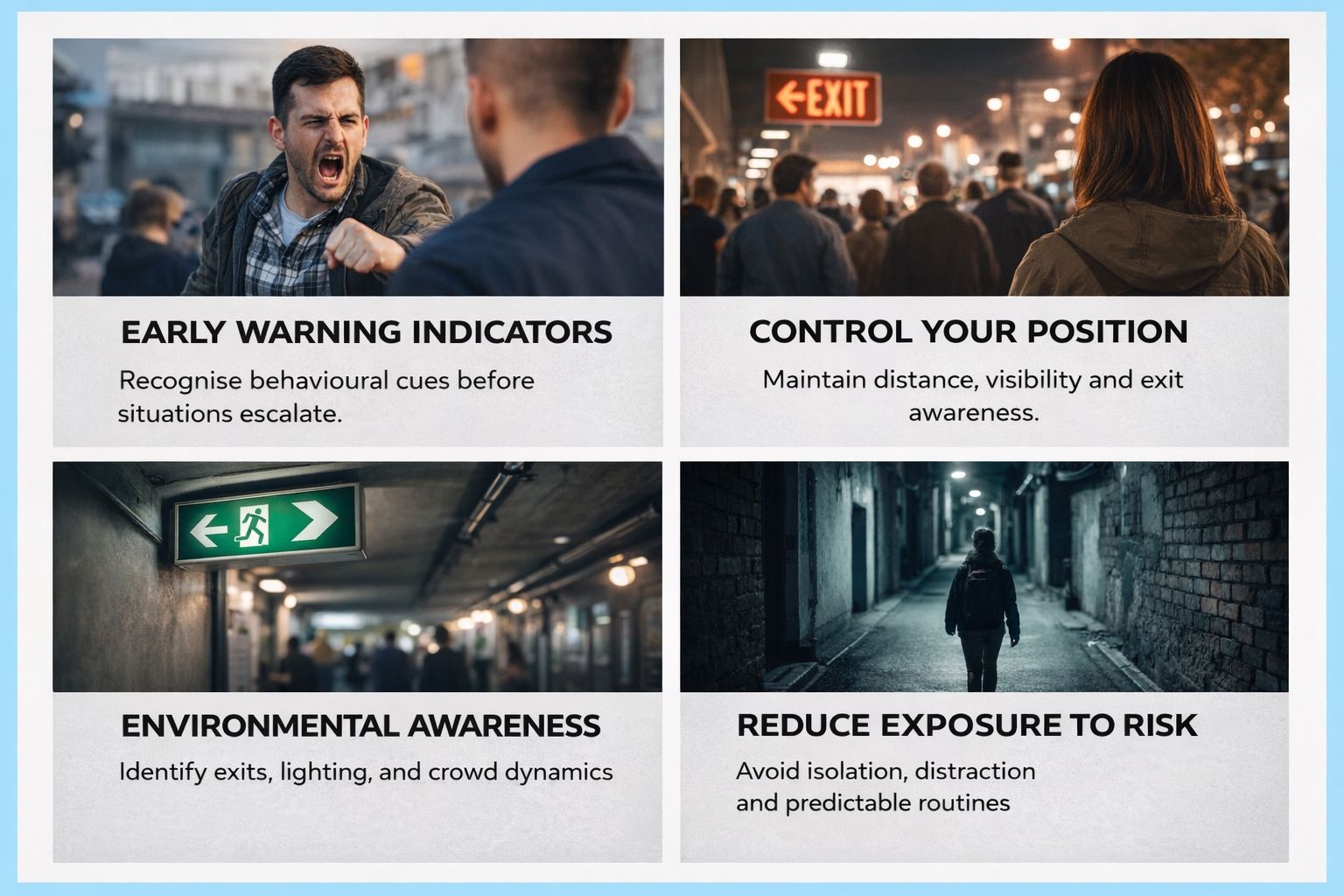
Aware360 Pro is a practical public safety and awareness platform designed to help people recognise danger early, think more clearly under pressure and make safer decisions in everyday life. Rather than focusing only on what to do once something has already gone wrong, it looks at the moments before escalation — where awareness, positioning, behaviour and decision making matter most.
I Don’t Feel Safe
Immediate support for people who feel unsafe right now. This section is designed to give clear, simple and practical actions when someone feels at risk, unsure, intimidated, followed, trapped, overwhelmed or unable to think clearly in the moment.
Get Help →Aware360 Pro Weekly Safety Brief
A regular breakdown of real incidents, public safety concerns and important lessons people can use in everyday life. The brief focuses on what happened, what warning signs were present, what can be learned and how to think more safely moving forward.
View Weekly Brief →TrustCheck
A verification system designed to help people check who they are dealing with before booking services, entering private appointments or engaging with professionals in one-to-one or vulnerable environments. TrustCheck supports safer, more informed decisions before commitment.
Open TrustCheck →Understanding the Difference
Many people use the terms martial arts, self-defence and self-protection as if they mean the same thing, but in real life they are very different. Understanding the difference matters because each one prepares people for a different type of situation, and confusion between them can create false confidence.