Tip: Use J / K to move through cards, and Space to read aloud when Read is On.
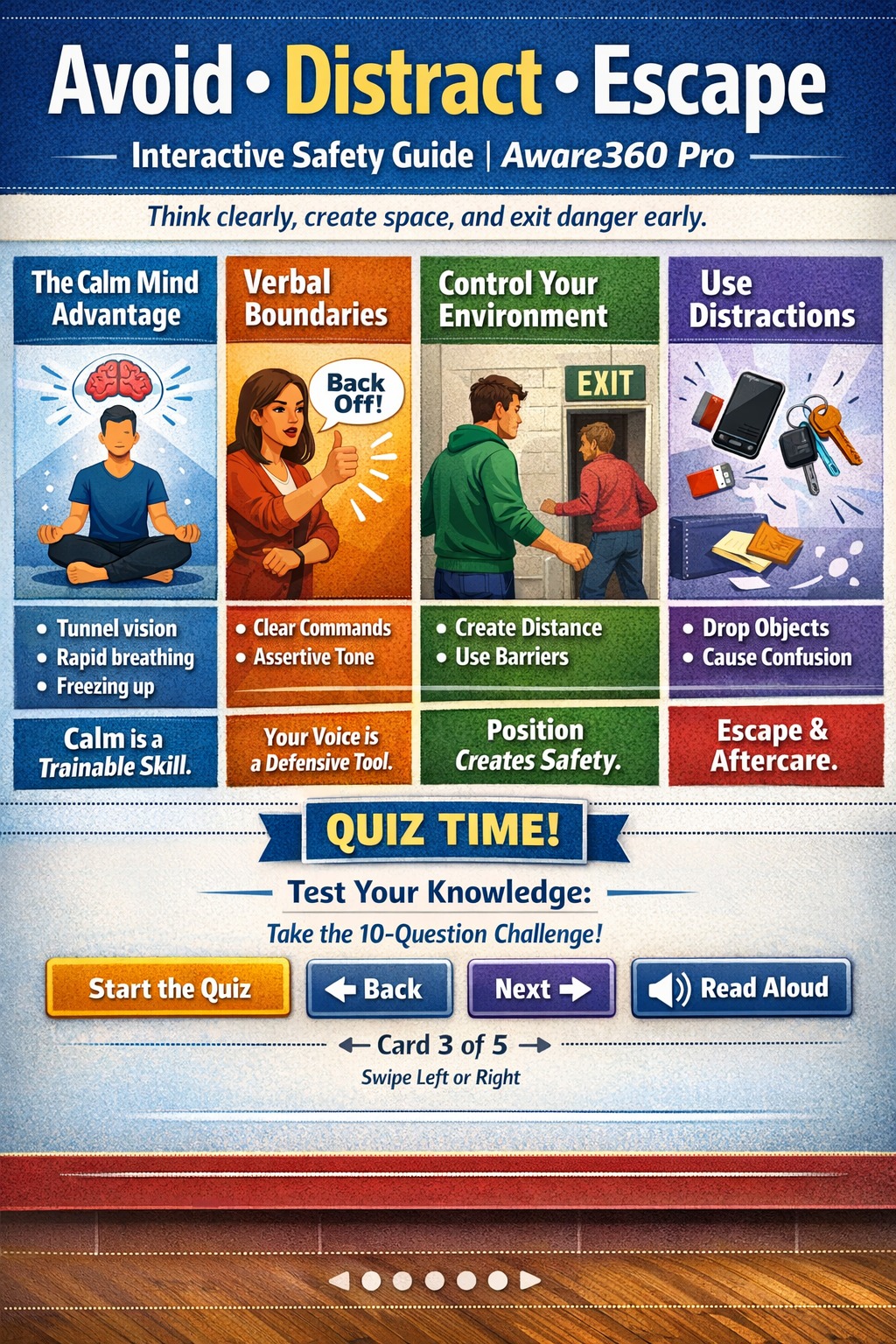
Module Visual: use this as the module banner image (separate from the background).
📌 What you’ll learn~12–20 min
How threats often escalate, how to avoid “trap zones”, how to use distraction without escalating, and how to escape and stabilise after.
🎯 OutcomeSafer decisions
You’ll leave with a repeatable plan, ready-to-use phrases, scenario practice, and a 10-question assessment.
✅ Progress0%
Complete the cards, simulator, checklist, and quiz.
Why this method works in the real world
Most harm begins with target testing and boundary pushing. The more time someone gets with you,
the more options they gain. Avoid • Distract • Escape keeps you focused on the safest outcome: distance + barriers + people.
🧭 Awareness⏱️ Seconds matter🚪 Exit strategy
Escalation chain (common pattern)
Target testing: watching who’s distracted, isolated, polite, or hesitant.
Boundary pushing: entering space, asking personal questions, “accidental” contact.
Isolation attempt: moving you toward corners, vehicles, stairwells, quiet paths.